Canny is a solid, focused feedback board: upvoting, a public roadmap, and a changelog that teams have trusted for years. Teams shortlist Canny alternatives in 2026 for two main reasons: pricing climbs as you add tracked users and seats, and the board lives separate from the support inbox and issue tracker where the work actually happens. Below: what Canny does well, a comparison table, a fair per-tool read, and how to choose.
Canny helped define the modern feedback board. Customers post requests, other customers upvote them, and a public roadmap and changelog close the loop when something ships. It does that job cleanly, and plenty of teams are happy on it. If you are searching for Canny alternatives, you are usually not unhappy with the board itself; you are weighing where it fits against everything else in your stack.
The two reasons that come up most: the price scales with tracked users and admin seats, so a growing user base quietly pushes you up the tiers, and the board sits apart from the two systems where product work lives. Feedback arrives on Canny, conversations happen in your support inbox, and engineering plans in an issue tracker. Keeping those three in sync is manual work that grows with volume.
This guide covers what Canny does well, the best Canny alternatives to shortlist in 2026 with a comparison table and a fair per-tool read, and a short framework for choosing. For the wider category beyond feedback boards, our guide to customer feedback tools covers surveys, analytics, and research tools too.
A fair shortlist starts by naming what Canny gets right. It is a purpose-built feedback board with a mature feature set, and for a lot of teams it is genuinely enough.
The voting board is clean and easy for customers to use. Merging duplicate requests, tagging, and segmenting voters by company or plan are all there. The public roadmap and changelog are tidy and require little setup. Integrations cover the common stack (Intercom, Slack, Jira, Linear, and a public API), and admins can post on behalf of users to capture feedback that arrives over other channels.
Two reasons dominate. First, pricing scales with tracked users and admin seats, so as your user base grows the bill moves up the tiers, and the entry plan limits the features smaller teams often want. Second, the board is a standalone surface. Feedback lands on Canny, but support conversations live in your inbox and engineering work lives in your issue tracker, so the same request gets re-entered and re-synced by hand across three tools. Teams looking at alternatives are usually trying to fix one or both: a more predictable price, or fewer tools to keep in sync.
Seven Canny alternatives worth shortlisting, from all-in-one platforms to a focused open-source board. The table gives the quick read; the prose below covers what you gain over Canny and where each one fits worse.
| Tool | Best for | Standout | Starting price |
|---|---|---|---|
| Productlane | B2B SaaS on Linear | Board, roadmap, changelog, inbox in one | From $29 / user / mo |
| Featurebase | Feedback-board-first teams | Generous free tier, AI categorization | Free; paid from low monthly |
| Frill | SMBs wanting simple and cheap | Board, roadmap, announcements, widget | Low flat monthly |
| Nolt | Single, focused public board | Clean voting board, flat per-board price | Flat per-board monthly |
| Upvoty | Solo founders and small teams | Board plus roadmap at a low price | Low flat monthly |
| Productboard | PM-led prioritization at scale | Feedback-to-prioritization framework | Higher per-maker pricing |
| Fider | Teams who want to self-host | Open-source voting board, free to run | Free (self-hosted) |
A longer read on each, in the order we'd shortlist them for a team leaving Canny.
What you gain over Canny. Two things at once. First, Productlane is Linear-native: a public feedback portal with upvoting, a public roadmap, and a changelog where every request ties directly to engineering work in Linear and closes the loop when the issue ships. The integration is bidirectional, so tickets and issues stay in sync, the AI agent files properly scoped issues, and a shipped issue auto-drafts the closing reply and the changelog entry. Second, it unifies the feedback board, roadmap, changelog, support inbox, and help center in one tool, where Canny is a board you bolt onto a separate support stack. The AI support agent resolves about 1 in 3 conversations end to end at $0.79 per resolution, and the in-app widget runs in 47 languages.
Where Canny fits better. If all you want is a standalone voting board and you have no interest in a support inbox or a Linear-centered workflow, Canny is a more focused, single-purpose tool. Productlane is a customer platform built for B2B SaaS teams on Linear, so it is the right call only if you want feedback, support, and shipping tied together.
What you gain over Canny. The closest like-for-like Canny replacement built around a feedback board, roadmap, changelog, and help center. A more generous free tier than Canny, AI-assisted categorization of incoming posts, and pricing that tends to land lower for growing user bases. A good fit if you want a feedback-board-first product without the enterprise weight.
Where it fits worse. It is a feedback and product-communication suite, not a support platform. There is no full support inbox, and the issue-tracker integration links to your planning tool rather than making it the source of truth.
What you gain over Canny. A clean, affordable bundle of an idea board, a roadmap, an announcements feed, and a widget at a low flat monthly price. Setup is quick and the design is polished. A strong fit for SMBs and early-stage teams who want the Canny shape at a friendlier price.
Where it fits worse. Lighter on segmentation, advanced prioritization, and deep integrations than Canny. As a team scales and wants to tie feedback to revenue and engineering work, the ceiling shows up.
The shortlist narrows fast once you answer three questions about your own stack.
If you want a focused board and nothing else, Featurebase, Frill, Nolt, and Upvoty all do that job at a range of prices. If you want feedback to flow into your support inbox and your issue tracker, so the same request stops getting re-entered three times, an all-in-one platform like Productlane fits better.
Boards priced per tracked user (Canny, Featurebase) get more expensive as your audience grows; boards priced flat or per board (Nolt) hold steady. Map your expected voter count against each pricing model before committing, because the cheapest option at 100 users is rarely the cheapest at 10,000.
If your team plans in Linear, a Linear-native tool removes the manual sync between feedback and engineering work entirely. If you want full data control and have the engineering capacity, a self-hosted board like Fider is viable. Match the tool to the systems your team already lives in, not to a feature checklist. Our feature request tracking guide covers the workflow side in more depth.
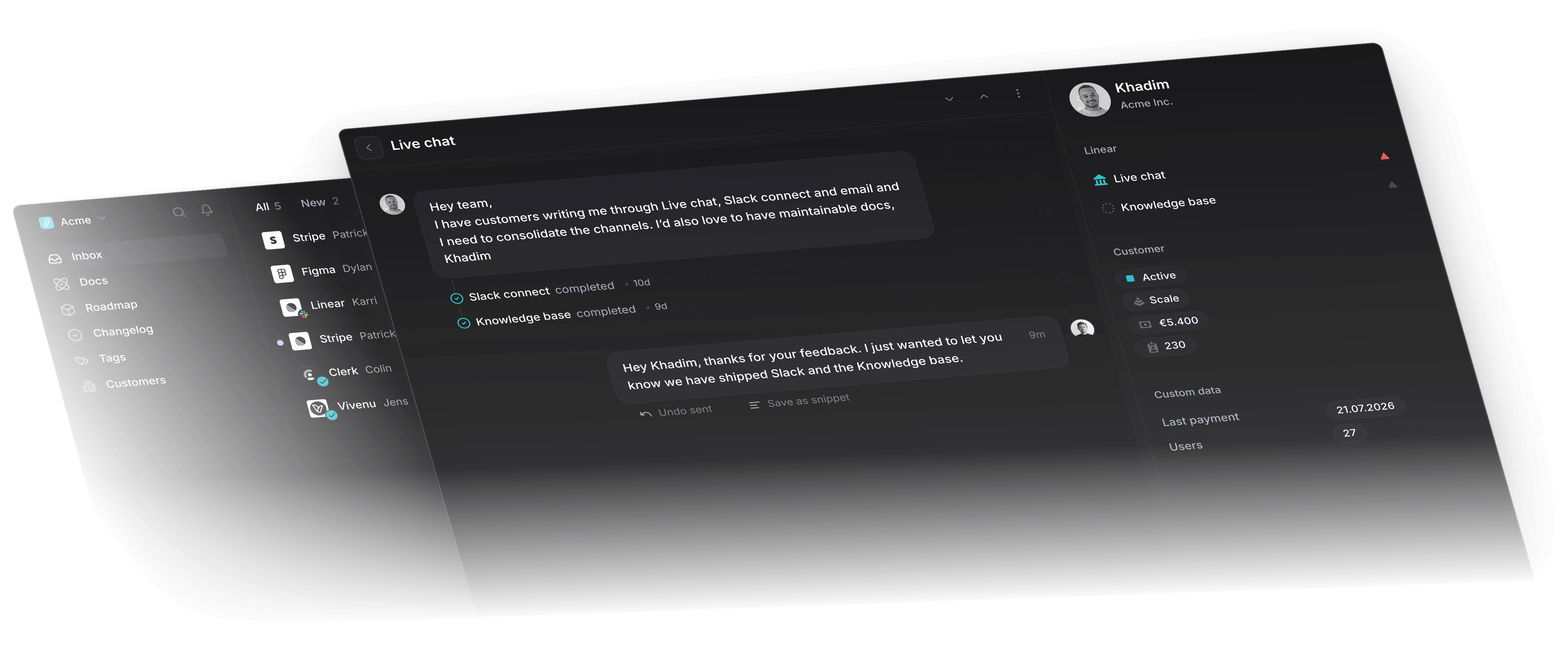
Most teams leaving Canny are also paying for a separate support inbox, a separate changelog tool, and sometimes a separate help center. Productlane consolidates the feedback portal, public roadmap, changelog, and support inbox into one product, with the Linear integration as the spine.

Feedback, support, and the Linear issue your engineers are working on, in one place.
The feedback portal gives customers a place to post and upvote requests, the public roadmap shows what is planned and in progress, and the changelog ships from the same workspace when work lands. Teams leaving Canny typically fold two or three vendors into one when they switch.
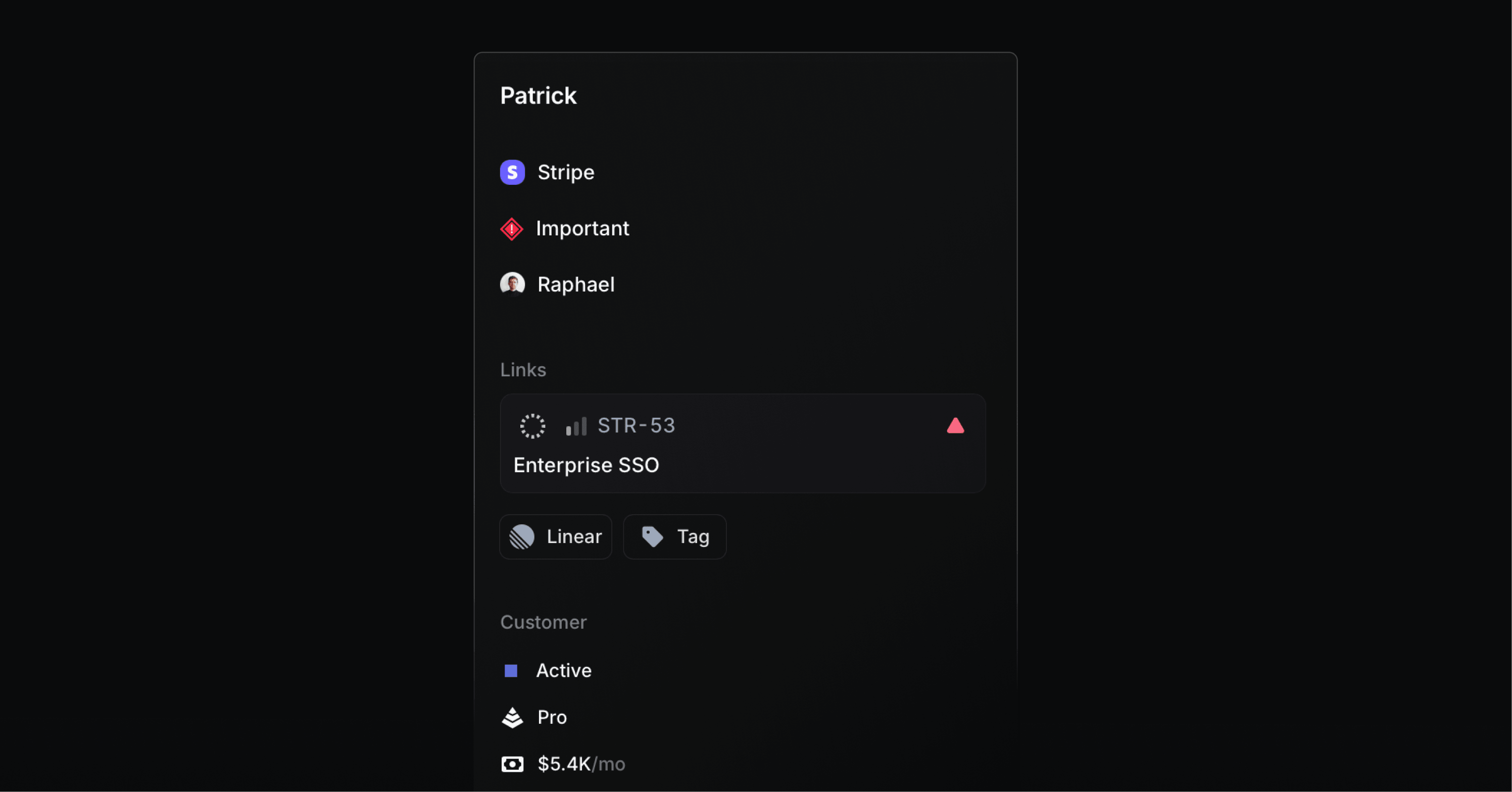
Every request can link to a Linear issue, bidirectionally synced. The AI agent files properly scoped issues from incoming conversations, and when the linked issue ships, Productlane auto-drafts the reply to the customer and the changelog entry. The voters who asked for it hear back without anyone copying status between tools.
The support portal and inbox sit alongside the feedback board, so a conversation that surfaces a feature request becomes a portal post in one step. The AI support agent resolves about 1 in 3 conversations end to end at $0.79 per resolution, using your help center as context.
Productlane starts at $29 per user per month billed yearly, with the AI agent billed per resolution at $0.79 rather than per tracked user. The inbox runs on Zero for sub-100ms interactions, so it feels instant even on large workspaces. See pricing for the full breakdown.
It depends on what you want the tool to do. For a focused feedback board, Featurebase is the closest like-for-like swap. For a board tied to a support inbox and a Linear-centered engineering workflow, Productlane fits best. For the lowest cost, Frill and Upvoty start cheap, and Fider is free to self-host. Pick by the systems your team already uses rather than by a feature checklist.
Yes. Fider is open-source and free to self-host, which covers the core voting board if you have the engineering capacity to run and maintain it. Featurebase offers a generous free tier for hosted use, and several other boards have free or low-cost starter plans. The trade-off with self-hosting is that you own hosting, upgrades, and security.
Two reasons come up most. Pricing scales with tracked users and admin seats, so a growing audience pushes you up the tiers. And the board is a standalone surface, separate from the support inbox and issue tracker, so the same request gets re-entered and re-synced by hand across three tools. Teams looking at alternatives usually want a more predictable price or fewer tools to keep in sync.
Canny is a mature, purpose-built feedback board. The voting board is clean, duplicate merging and voter segmentation work well, and the public roadmap and changelog need little setup. Its integrations cover the common stack including Intercom, Slack, Jira, and Linear. For teams who want a focused, standalone board, Canny is a strong choice.
Canny is a standalone feedback board. Productlane puts a feedback portal with upvoting, a public roadmap, and a changelog in the same tool as a support inbox, with a bidirectional Linear integration as the spine. Feedback from support conversations becomes a portal post and a Linear issue, and when the issue ships, Productlane auto-drafts the closing reply and changelog entry. The AI support agent resolves about 1 in 3 conversations at $0.79 per resolution.
Productlane has the deepest Linear integration of the options here: bidirectional sync between tickets and issues, an AI agent that files properly scoped Linear issues from feedback and conversations, and a changelog that drafts itself when the linked issue ships. The other tools integrate with Linear, but treat it as a downstream system rather than the source of truth.
Fider is the main open-source feedback board: a clean voting board you can self-host for free under your own control. The license cost is zero, but you take on hosting, upgrades, and security, and the roadmap and changelog tooling is basic with no AI layer. For teams with engineering capacity and a strong preference for owning their data, it is a real option.
Canny is a good board. The question is whether a board is what you need, or whether feedback, support, and shipping should live in one place. If a focused, standalone board is the goal, Featurebase, Frill, Nolt, Upvoty, and Fider each fit a different budget and team size. If you want feedback tied to the inbox and the issue tracker, an all-in-one platform earns its keep.
For B2B SaaS teams whose engineers live in Linear, Productlane is the tool we wanted ourselves. It is Linear-native, so a request links to the issue your team is building and the loop closes itself on ship, and it brings the feedback board, roadmap, changelog, support inbox, and help center under one roof rather than scattering them across vendors. Plans begin at $29 per seat each month on annual billing, and the AI agent is metered per resolution.
You can try Productlane for free, see pricing, or read our broader guide to building a public product roadmap for the roadmap side of the workflow.
Omnichannel support engineered for AI. Built around Linear to turn customer messages into code instantly.

What you gain over Canny. A simple, well-designed public voting board priced flat per board rather than per tracked user. That pricing shape is attractive if your voter base is large but you only need one or two boards. Customers can post and vote with little friction.
Where it fits worse. Nolt is focused on the board itself. Roadmap and changelog tooling are lighter, and there is no support inbox or AI layer. It is the right pick when a single, focused board is all you need.
What you gain over Canny. A low-cost feedback board with a roadmap, aimed at solo founders and small teams. It covers the core capture-and-vote loop at a price that suits early products, and it is quick to stand up.
Where it fits worse. The feature depth, integration catalog, and polish sit below Canny and Featurebase. It works best for small teams whose needs stay simple as they grow.
What you gain over Canny. A product-management platform that turns feedback into a structured prioritization framework. Strong for PM-led orgs that need to weigh inputs against objectives, build feature scoring, and manage a richer planning process than a voting board provides.
Where it fits worse. It is heavier and more expensive than a feedback board, priced per maker seat, and the public-facing portal and changelog are not its center of gravity. For a team that mainly wants customers to post and vote, it is more product than the job needs.
What you gain over Canny. An open-source feedback and voting board you can self-host for free. The right pick if you want full control of your data, no per-user billing, and the engineering capacity to run and maintain it.
Where it fits worse. Self-hosting means you own hosting, upgrades, and security. The roadmap and changelog tooling is basic, there is no AI layer, and there is no support inbox. The free license is real, but the engineering time it takes to run it is the actual cost.